
January 29, 2026
How Often Should You Groom Your Dog?
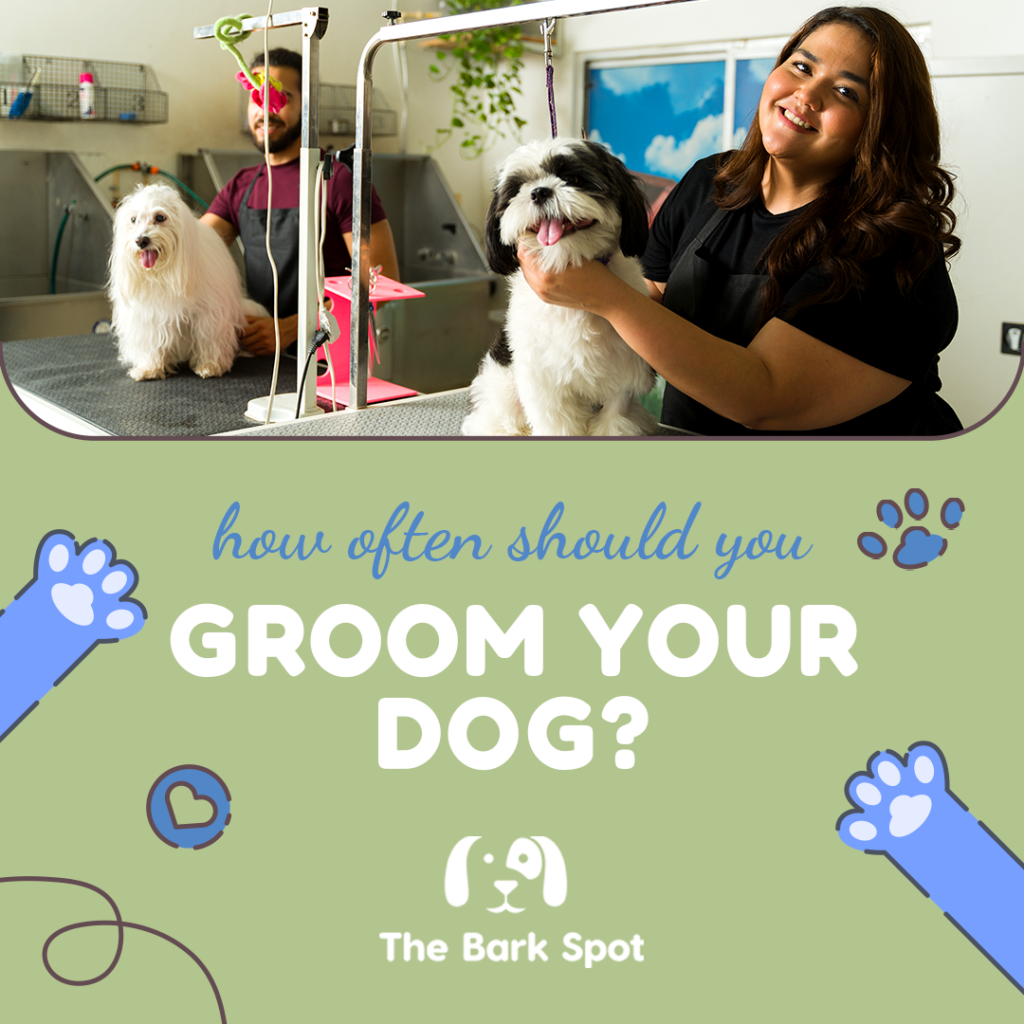
If you’ve ever wondered, “How often does my dog really need grooming?” — you’re not alone.
Some pups seem fresh and fluffy for weeks, while others look like they need a bath after one trip around the block. The truth is, grooming isn’t just about keeping your dog looking cute (though we love that part). It’s a key part of their overall health and comfort.
At The Bark Spot, we see firsthand how regular grooming keeps dogs cleaner, healthier, and happier. Whether your pup needs a quick bath or a full spa day, the right grooming schedule can make all the difference.
Let’s break down how often your dog should be groomed based on coat type, lifestyle, and health — plus signs it’s time to book their next appointment.
Why Regular Grooming Matters
Grooming is more than just a haircut or bath. It helps:
- Remove dirt, debris, and allergens
- Prevent painful matting and tangles
- Reduce shedding around your home
- Keep skin healthy and itch-free
- Catch lumps, bumps, or skin issues early
- Trim nails to prevent joint strain
- Clean ears to prevent infections
- Keep your dog smelling fresh
Dogs who stick to a regular grooming routine tend to be more comfortable, less itchy, and less stressed overall.
And honestly? They feel better too.
How Often Should Dogs Be Groomed?
There isn’t one universal answer. Grooming frequency depends on:
- Coat type
- Hair length
- Shedding level
- Activity level
- Skin sensitivities
- Breed needs
Here’s a simple guide to help you determine what’s best for your pup.
Grooming Frequency by Coat Type
Short-Haired Dogs (every 4–8 weeks)
Examples: Labs, Beagles, Boxers, Pit Bulls, Dalmatians
Short coats are lower maintenance, but they still need regular care.
Even though these dogs don’t require haircuts, they still shed, get dirty, and need nail trims.
Recommended schedule:
- Bath: every 4–6 weeks
- Brush: 1–2 times per week
- Nails/ears: monthly
Regular baths help control shedding and keep skin healthy.
Medium or Double-Coated Dogs (every 4–6 weeks)
Examples: Golden Retrievers, Huskies, German Shepherds, Aussies, Corgis
These dogs have an undercoat that sheds heavily — especially seasonally.
Professional grooming helps remove loose fur and prevents thick buildup that can trap heat and cause skin issues.
Recommended schedule:
- Bath + blowout/de-shed: every 4–6 weeks
- Brush: several times per week
- Seasonal deep de-shedding: spring and fall
Skipping grooming can lead to excessive shedding, overheating, and matting near the skin.
Long-Haired or Silky Coats (every 4–6 weeks)
Examples: Shih Tzus, Yorkies, Maltese, Spaniels, Afghan Hounds
Long hair tangles quickly — sometimes daily. Without regular brushing and trims, mats can become tight and painful.
Recommended schedule:
- Full groom/haircut: every 4–6 weeks
- Brush: daily or every other day
- Face, feet, and sanitary trims: between appointments if needed
These coats need consistency to stay comfortable and manageable.
Curly or Doodle Coats (every 4–5 weeks)
Examples: Poodles, Goldendoodles, Labradoodles, Bernedoodles
Curly coats don’t shed much — but they mat easily. Very easily.
Because loose hair gets trapped in the curls, it can form tight mats close to the skin if not brushed regularly.
Recommended schedule:
- Full groom: every 4–5 weeks
- Brush: daily or every other day
- Professional dematting prevention is key
Waiting too long between appointments often means coats must be shaved shorter than expected. Regular grooming keeps the fluff without the frustration.
Wire-Haired or Terrier Coats (every 6–8 weeks)
Examples: Schnauzers, Terriers, Scotties, Wirehaired Dachshunds
These coats need shaping and trimming to maintain their signature look.
Recommended schedule:
- Groom/trim: every 6–8 weeks
- Brush: weekly
Hand-stripping or clipping keeps coats healthy and neat.
Other Factors That Affect Grooming Frequency
Lifestyle
Does your dog:
- Swim often?
- Play outside daily?
- Visit the dog park?
- Roll in everything?
Active pups may need more frequent baths.
Skin Conditions or Allergies
Dogs with sensitive skin, hot spots, or allergies often benefit from medicated or specialty baths more often.
Regular grooming helps:
- Remove allergens
- Reduce itching
- Soothe irritation
Shedding Season
Spring and fall coat “blowouts” can double the amount of loose hair.
Extra de-shedding appointments during these times can save your vacuum — and your sanity.
Signs Your Dog Needs Grooming Sooner
Even with a schedule, watch for these clues:
- Strong doggy odor
- Visible dirt or greasy coat
- Excessive shedding
- Tangles or mats
- Scratching or licking
- Clicking nails on the floor
- Red or dirty ears
- Hair covering eyes
If you notice any of these, it’s probably time to book a visit.
What Happens If You Wait Too Long?
Putting off grooming can lead to:
- Painful matting that pulls on skin
- Skin infections
- Ear infections
- Overgrown nails affecting posture
- Increased shedding
- Trapped moisture causing hot spots
- Discomfort and stress
In severe cases, coats may need to be shaved for your dog’s health.
Staying consistent prevents these issues and keeps grooming positive.
At-Home Care Between Professional Grooms
Professional grooming is essential — but maintenance at home makes a huge difference.
Easy habits to keep up with:
- Brush regularly (based on coat type)
- Wipe paws after walks
- Clean ears gently
- Brush teeth
- Check for tangles
- Keep eyes clean
- Monitor nails
Just 5–10 minutes a day can prevent bigger problems later.
Why Professional Grooming Makes a Difference
While baths at home are helpful, professional grooming offers benefits you can’t easily replicate:
At The Bark Spot, our team provides:
- Thorough bathing and drying
- Breed-specific cuts and styling
- Safe nail trimming and grinding
- Ear cleaning
- De-shedding treatments
- Mat removal
- Skin and coat checks
- A calm, caring environment
Plus — we know how to keep your pup comfortable and stress-free during the process.
Many dogs actually come to see grooming as their spa day.
Sample Grooming Schedule Cheat Sheet
Here’s a quick reference:
Every 4–5 weeks
- Doodles, poodles, long-haired breeds
Every 4–6 weeks
- Double coats, medium coats
Every 6–8 weeks
- Short coats, terriers
Daily/weekly
- Brushing at home
When in doubt, ask your groomer. We’re happy to recommend a personalized schedule for your dog’s coat and lifestyle.
Creating a Routine Your Dog Loves
Dogs thrive on routine. When grooming happens consistently:
- They’re less anxious
- They’re easier to handle
- Visits are quicker
- The results are better
Starting early (especially with puppies) helps them see grooming as a normal, positive experience.
Your Dog Deserves to Feel Their Best
Regular grooming isn’t just about appearances — it’s about comfort, hygiene, and health.
A clean coat, trimmed nails, and healthy skin mean:
- Fewer issues
- Less itching
- More playtime
- More cuddles
- A happier pup
And that’s what every pet parent wants.
Let The Bark Spot Help
Not sure how often your dog should come in? We’ve got you covered.
At The Bark Spot, we’ll assess your dog’s coat, lifestyle, and needs to create the perfect grooming plan. Whether it’s a quick bath, full haircut, or de-shedding treatment, our team is here to keep tails wagging.
Because when your dog feels good, you feel good too.
Ready to schedule your pup’s next spa day? Contact The Bark Spot today — we can’t wait to meet your furry friend.